


While the AI mania will no doubt be front of mind for most folks as the driver of the now 4 year bull market, it’s important to recognize just how much fiscal and monetary policy greased the wheels along the way, particularly over the last couple years.
The ‘24 start to the Fed cutting cycle combined with the large stimulus efforts of the OBBB and the injection of cash from the tariff refunds over the summer have cushioned what would have otherwise been larger challenges to the economy and kept growth around long-term potential and helped push markets to highs.
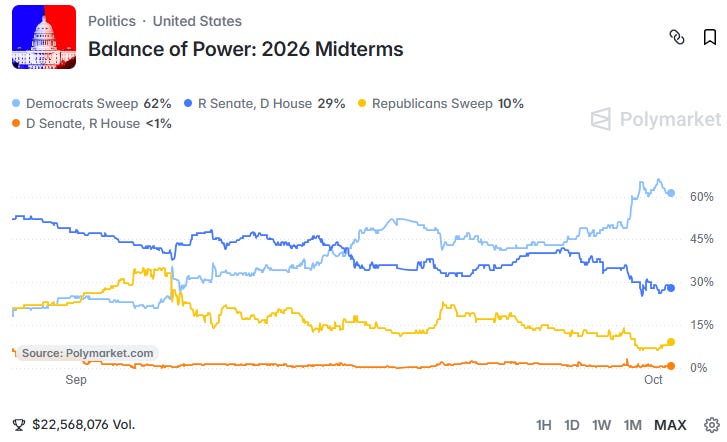
But as we look toward ‘27, it appears that those orthodox policies are increasingly running out. The OBBB itself turns from a positive to a negative next year and the electoral map is increasingly positioned for obstruction rather than expansion in policy ahead. The nearly 150bln in tariff refunds benefitting corps will be over shortly. And the Fed looks increasingly on a hiking cycle driven by the macro realities of inflation persistently above target.
The combination leaves little in the way of the type of fiscal or monetary support that has been so important to keep the economy and markets going over the last couple years. Instead from a policy perspective it looks like a more traditional late stage tightening.
Faced with the challenge of little conventional ways to address it, the biggest question is whether the administration will turn to less conventional efforts to manipulate the markets. The most obvious lever is some combination of buybacks/reduced issuance to pull duration supply out of the markets. Or even drawing down the TGA below statutory minimums to pump extra cash into the economy. Doing both in meaningful size could be enough to engineer another leg higher.
The admin could further expand its maximum pressure campaign on the Fed in order to put more soft-money friendly folks into the role. Continued efforts to oust both Powell and Lisa Cook certainly point in that direction, and the admin could try their hand at going after regional presidents once in control of the Board.
But transitioning from traditional policy steps to more extreme efforts would likely be over the direct opposition of the orthodox establishment policymakers in these roles at both the Fed and the Treasury. Ones that will be around well after the current admin moves on.
That doesn’t mean the efforts from top-down are impossible, but what it does mean is creating the next pump is gonna be a whole lot harder than many in the markets today have come to expect.
A Look At The Numbers
Over the last year the stimulus efforts from the OBBB were critically important to cushioning the large oil shock the economy has faced and supported the continued buildout of the AI investment boom. While the opposition is certainly not in the business of fiscal consolidation (no one is in Washington these days…), it’s unlikely that they will support any further stimulus (like the promised 5k checks) in the run up to the ‘28 election absent a crisis.
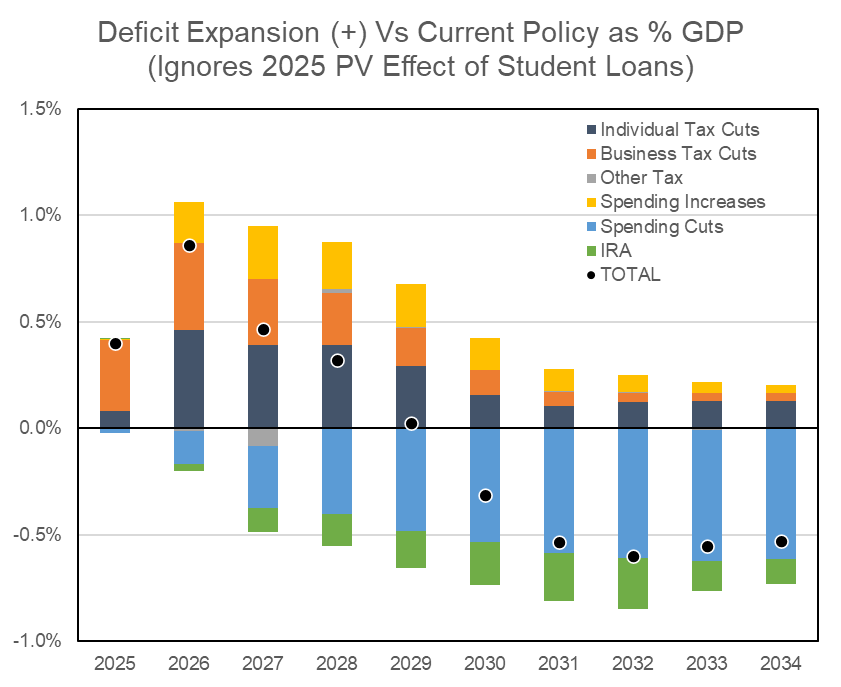
This comes at a time when the stimulus benefits of the OBBB are now shifting to a bit of a drag in ‘27. And this understates the magnitude of the shift since the higher refund check impact that shows in ‘25 here was actually pushed into early ‘26.
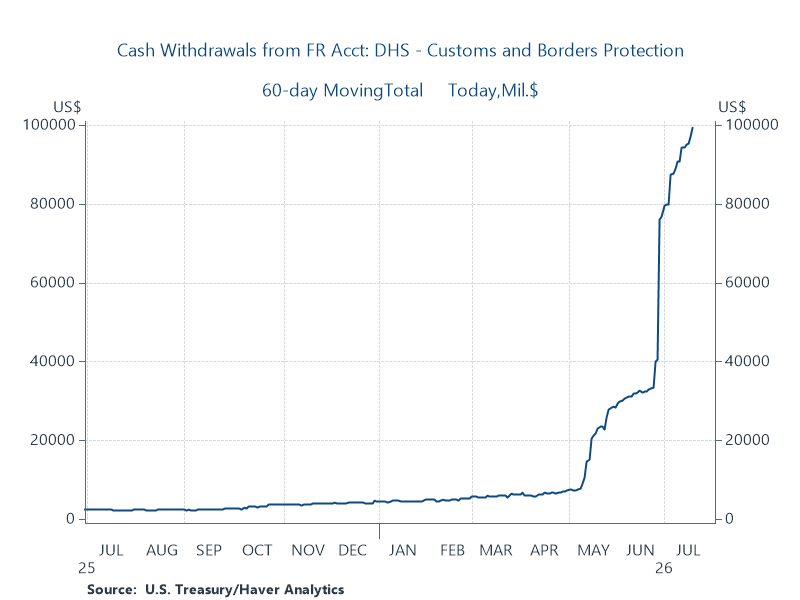
Further the big injection from tariff refund checks is set to wind down over the next couple weeks. 150bln over the course of a couple months is actually a pretty big deal for corporates, but that benefit will now shift to zero.
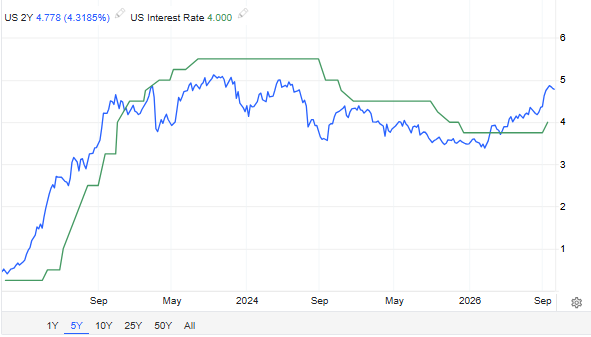
While fiscal policy is shifting to be more restrictive so too is the Fed. While there is some debate about how many hikes will come ahead, a tightening cycle is clearly afoot and it marks an important reversal from the easing dynamics that helped support the economy and markets in ‘24-’26.
Further the Fed balance continues to contract, with very little likelihood of pumping further. Even the short-term liquidity program announced near the end of ‘25 has largely been done away with.
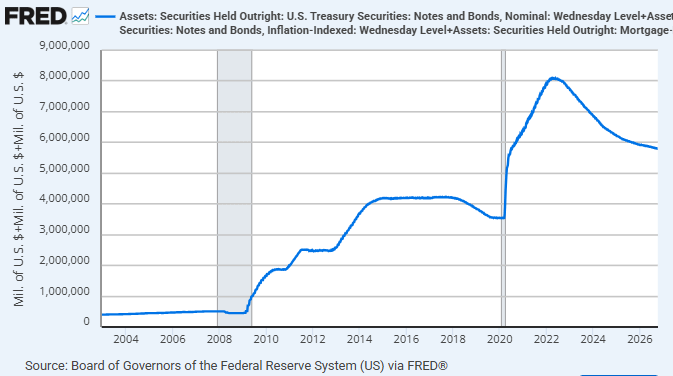
On the surface this all aligns with a pretty clear policy tightening cycle from both fiscal and monetary policy coming in ‘27, which leaves little room for the admin to be able to pump the markets further.
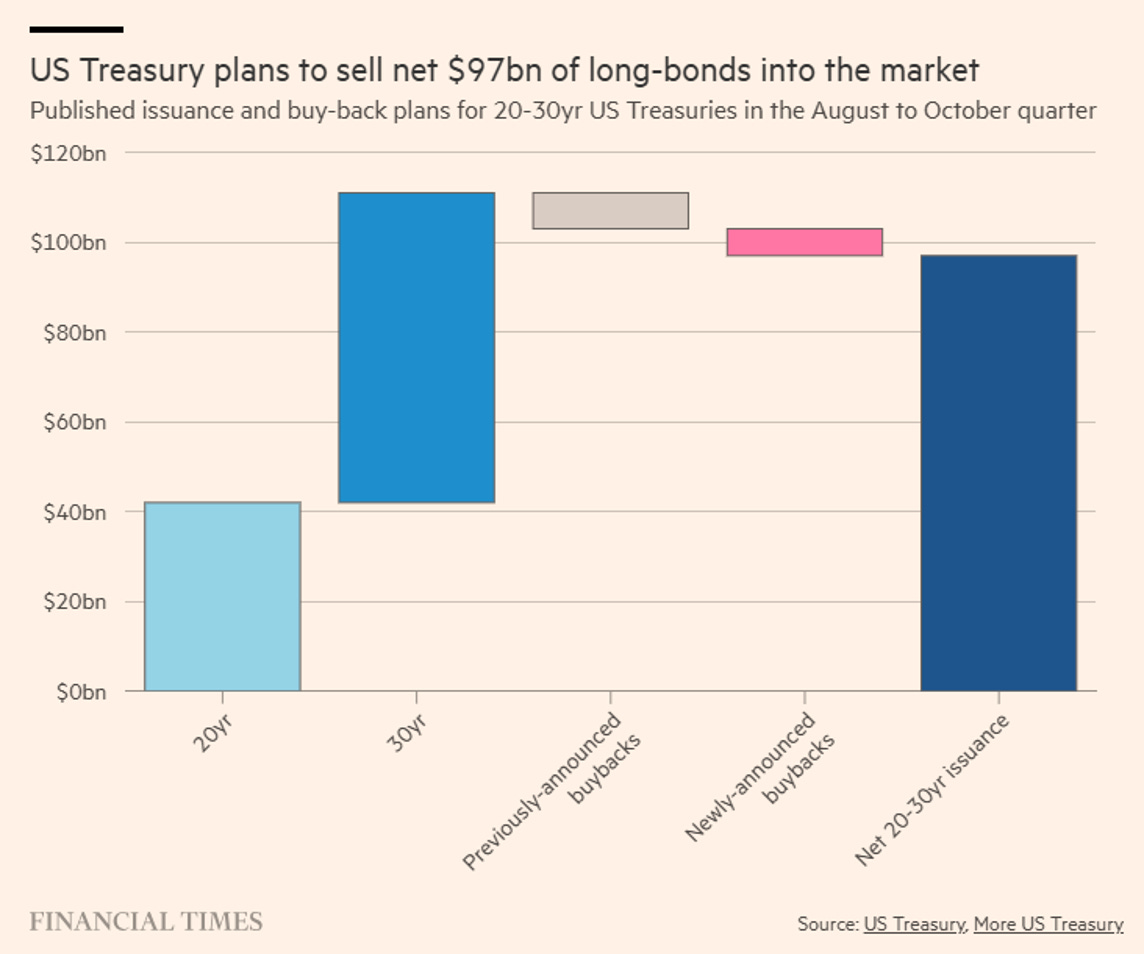
The main outstanding lever that could be used is in the Treasury issuance / buyback front. So far the efforts have been irrelevant to the actual duration supply in the market and bond yields have blown right through it. Doing something more meaningful would likely be directly against the career staffers which are focused on smooth running bond markets. The next QRA will be telling.
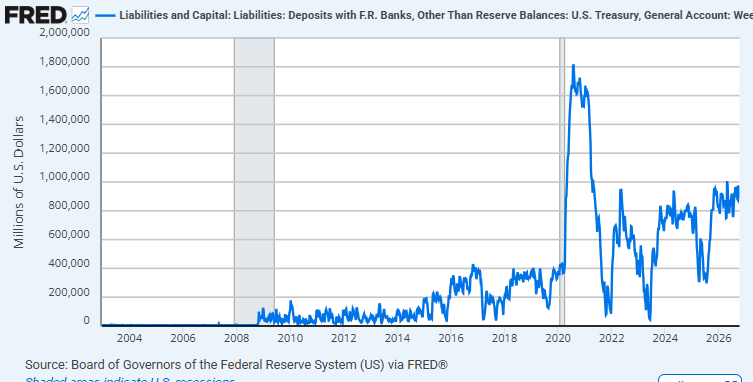
And finally the government also has about a 1tln kitty in the TGA. Now that amount is largely statutorily determined as being enough to cover 5 days of gross financing needs (in case 9/11 or similar happens). Historically it has only been drawn down below these levels due to a debt ceiling issue. Drawing down these funds say for some sort of stimulus effort *could* happen, but it would go directly against a multi-decade policy.
Bottom Line
Many folks forget just how much the markets and economy have been helped by fiscal and monetary stimulus over the last couple years. That is now reversing just at a time when expectations for the future are at their highest.
Getting a renewed pump from policymakers would likely require unorthodox efforts at Treasury or to gain control of the Fed. While that may be possible, the road is in direct contradiction to long-established norms and likely in opposition to officials who have careers well after this administration moves on. So while its possible, but its sure gonna be a lot harder than the efforts so far.
Here is the question I am struggling with: will the tightening be sufficiently strong to cool down the economy? Or are we dealing with tightening that is behind the curve, meaning the economy will accelerate even further above the potential growth?